We take a big whiff of our dog's breath during a happy cuddle session, and we grimace. We say, "Ugh, doggy breath!" and we move on. We think it is just a normal part of being a dog. We think that as they get older, the smell is just a "tax on getting older."
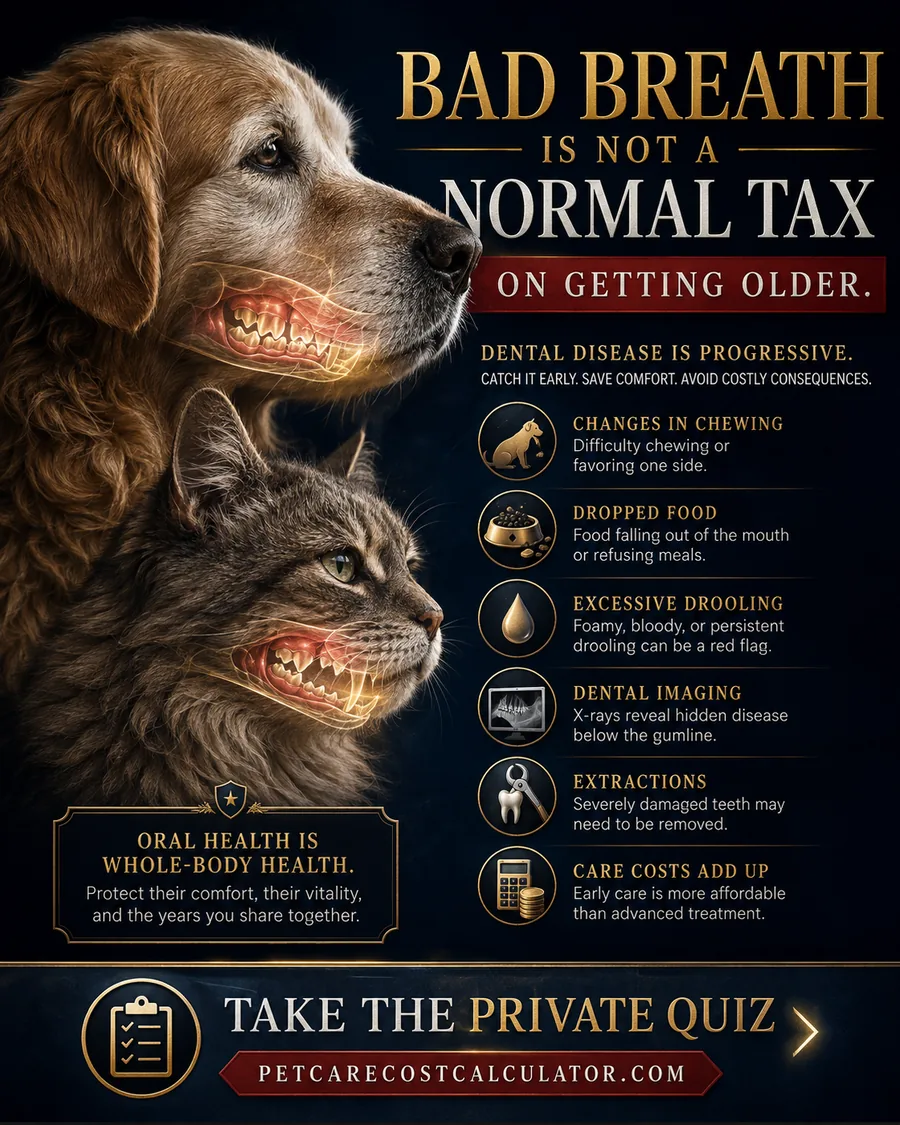
But the image looking back at us delivers a harsh, unforgiving warning: "Bad Breath Is Not A Normal Tax On Getting Older. Dental Disease Is Progressive. Catch it early. Save comfort. Avoid costly consequences."
What is "bad breath"? It is not just a smell. That smell is the toxic off-gas of an active, purulent bacterial infection. It is caused by plaque that has hardened into tartar, which has pushed under the gums, creating deep pockets of periodontal disease.
The image breaks down the terrifying physical and financial consequences of ignoring this smell:
Changes in Chewing: The gum tissue is so inflamed and painful that they favor one side of their mouth. They chew slowly and awkwardly.
Dropped Food: They are starving, but they physically cannot chew. The food falls right out of their mouth because their teeth are loose,
The useful takeaway is simple: persistent bad breath should not automatically be dismissed as a normal feature of aging. Track the odor together with chewing changes, dropped food, drooling, appetite, and facial sensitivity, then bring those observations to a veterinarian. The earlier the mouth is properly examined, the easier it is to understand what is actually happening and what treatment may cost.
Bad breath is a signal, not a diagnosis
- Does the estimate include pre-anesthetic bloodwork?
- Are full-mouth dental X-rays included?
- Is the cleaning performed under general anesthesia?
- How are unexpected diseased teeth handled during the procedure?
- Are simple and complex extractions priced differently?
- Are pain medication and follow-up included?
- What findings would move the final bill toward the high end of the estimate?
What to ask for in a dental estimate
Dental disease tends to progress rather than repair itself. As inflammation and structural damage increase, treatment can become more involved and may require additional extractions, longer anesthesia time, medications, and follow-up. Early assessment does not guarantee that a simple treatment will be enough, but it can give the veterinarian more options before the disease becomes severe.
Why waiting can make treatment more complicated
A professional cleaning removes plaque and tartar and allows the veterinary team to evaluate the mouth more closely. Severely diseased or damaged teeth may need extraction. The final plan depends on the individual tooth, the surrounding bone, the pet's overall health, and what the dental X-rays show. That is why comparing only the advertised price of a cleaning can be misleading.
Cleaning and extraction are not the same thing
Much of a tooth sits below the gumline, so the visible crown does not tell the entire story. Dental radiographs can reveal root disease, bone loss, retained roots, resorptive lesions, or damage that cannot be seen during an awake visual inspection. A dental estimate may therefore change after the pet is anesthetized and full-mouth imaging is completed.
Why dental X-rays may be recommended
Excessive drooling, blood-tinged saliva, visible swelling, reluctance to have the face touched, or a sudden preference for soft food can all justify a veterinary dental evaluation. None of these signs identifies the exact diagnosis by itself. The point is to notice the pattern early enough that the mouth can be examined before the problem becomes more advanced.
Drooling, blood, and facial sensitivity are worth noting
One of the most useful clues is a change in the mechanics of eating. A dog or cat with oral discomfort may chew on one side, take longer to finish a meal, drop kibble, avoid hard food, paw at the mouth, or walk away from food that they previously ate eagerly. Those changes deserve attention because animals often continue eating despite significant dental pain.
Watch how your pet chews
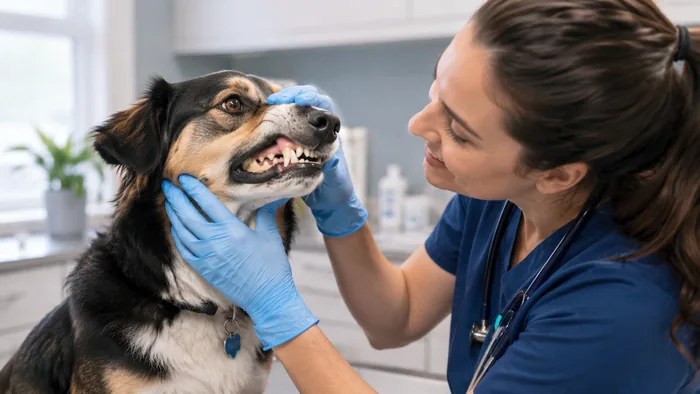
Persistent bad breath can be associated with plaque, tartar, gingivitis, periodontal disease, infected or damaged teeth, and other oral problems. It is not possible to determine the cause from odor alone, so a veterinary oral examination matters, especially when the smell is new, worsening, or accompanied by changes in eating or behavior.
What persistent bad breath can tell you
Not sure what pet care may cost?
Use the free private assessment to organize likely treatment and cost questions before you speak with a veterinary provider.
Take the Private QuizRelated Idaho pet-care cost guides
Cat Dental Extraction Cost in Idaho · Dog Dental Extraction Cost in Idaho