
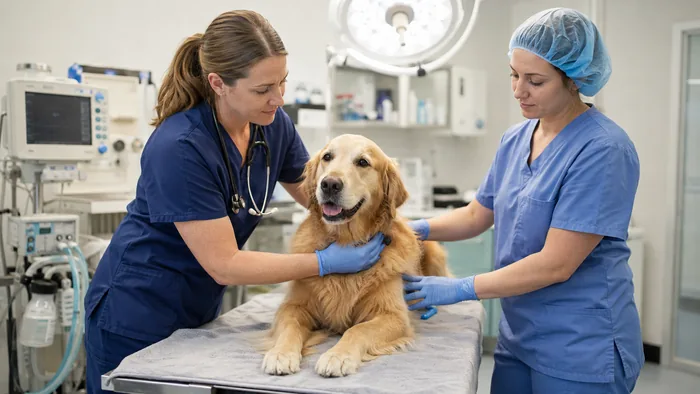
We spend so much time preparing our bank accounts for the "what ifs" of pet ownership. We obsess over the cost of emergency surgery, the price of prescriptions, and the shock of a diagnostic test. But there is a massive, crushing, undeniable bill that we never see coming until we are living it. It isn't paid in dollars; it's paid in hours. It is the slow, soul-draining realization that your pet is no longer a pet—they have become a patient, and you are their full-time, unpaid nurse.
This image illustrates an invisible clock. A clock that dictates your entire existence. At 7:00 AM, it's time for medication, struggling to get them to swallow a pill they hate. At 8:00 AM, it's a feeding process that takes twice as long as it used to because they have no appetite and are in pain. By 9:30 AM, you are helping them up to go to the bathroom, physically lifting their hindquarters so they don't fall over. By 11:00 AM, you are lifting them, supporting them, repositioning their bodies to stop bed sores.
Then comes the afternoon: the endless appointments, the cleaning up of accidents, the sheer exhaustion of keeping up with their needs while trying to remain a functional human being. By 6:00 PM, you are giving round three of medications. By 8:00 PM, they are asleep, and you have a moment to breathe. But 10:00 PM rolls around, and you are at your laptop, trying to catch up on work that you lost during the day. And then, 2:00 AM hits, and they are restless again, waking you up just so they aren't alone.
This is the hardest bill. It is the bill of caregiver fatigue. It is the exhaustion of watching someone you love slowly degrade, knowing that their quality of life is fading, and feeling utterly helpless. We think we are prepared to deal with the financial cost, but we are never prepared for the mental and physical toll of geriatric care.
The harsh reality is that 90% of this 24-hour care—the lifting, the medication, the fatigue, the stress—is completely preventable. We don't have to watch our pets reach the point of needing round-the-clock nursing. We don't have to become their caretakers just because they got old.
Why do we end up in this situation? Because we are reactive, not proactive. We wait for the vet to tell us their kidneys are failing before we think about kidney health. We wait for them to collapse before we worry about their legs. We wait until the hardest bill—the bill of hours—arrives before we realize we should have done something years ago.
When a pet ages, their cells degrade. The mitochondria—the energy producers of the cells—start to burn out. This causes a cascade of symptoms: fatigue, cognitive dysfunction, organ failure, and joint deterioration. The fatigue at 2:00 AM is caused by the failing cells inside their body. The inability to walk is caused by the degradation of their structural proteins.
We need to stop waiting for the "Hardest Bill" of time. By giving them the foundational, cellular support they need throughout their lives—especially as they enter their senior years—we can prevent the breakdown before it happens.
Supporting them isn't just about keeping them alive; it is about keeping them autonomous. It is about ensuring that at 12 years old, they can still jump into the car on their own. It is about ensuring that at 13 years old, they still have the appetite to eat their food without a struggle.
The goal is not to be a heroic caregiver. The goal is to be a pet owner who gave their best friend the tools to never need a caregiver. If you are currently living on the 7 AM to 10 PM medication schedule, I am so sorry, and I hope you find strength. But if you are looking at your dog and seeing the early signs of slowing down, understand this: You still have time to choose a different timeline.
Choose the timeline where the hardest bill is a vet visit for a happy checkup, not the exhaustion of a 3 AM sleepless night.
Not sure what pet care may cost?
Use the free private assessment to organize likely treatment and cost questions before you speak with a veterinary provider.
Take the Private QuizRelated Idaho pet-care cost guides
Overnight Vet Hospitalization Cost in Idaho · Paying for Veterinary Care in Idaho