Veterinary Ultrasound Cost in Nampa, Idaho
What can be included in the bill?
- Veterinary exam
- Ultrasound study
- Specialist interpretation
- Sedation when needed
- Biopsy or aspirate if indicated
- Emergency fee
- Follow-up testing
For Nampa pet owners, the most useful comparison is not a fake citywide average. It is whether two estimates include the same diagnostics, monitoring, medications, procedures and follow-up care.
What should you ask a Nampa veterinary provider?
- What is included in the written estimate?
- Which items are required now versus conditional?
- Could emergency timing or hospitalization add more?
- Will a specialist be involved?
- Are rechecks or follow-up imaging included?
- What changes would trigger a higher estimate?
Related Idaho pricing context
Frequently asked questions
How much does this treatment cost in Nampa?
There is no single price charged by every local veterinary provider. Use the Idaho-wide benchmark linked on this page, then ask the treating clinic for a written estimate based on your pet's actual case.
Why can two clinics quote different amounts?
Facility type, emergency timing, diagnostics, anesthesia, specialist involvement, medications and hospitalization can all change the total.
Should I choose based on price alone?
No. Urgency, provider capability, specialist access, monitoring and the needs of the individual pet matter alongside price.
Can I ask for an itemized estimate?
Yes. Ask what is included now, what is contingent on test results and what could increase the estimate.
Does pet insurance cover this?
Coverage depends on the policy, waiting periods, deductibles, exclusions and whether the condition is considered pre-existing.
What if my pet needs emergency care?
Do not delay urgent veterinary treatment while trying to compare exact prices. Contact an emergency veterinary provider for immediate guidance.
Are these prices guaranteed local quotes?
No. PetCare Idaho provides educational cost context and links to statewide benchmarks; it does not set or guarantee clinic prices.
Where should I go next?
Use the related Idaho cost guide for pricing context, then contact an appropriate local veterinary provider based on urgency and treatment needs.
What you are actually paying for with a veterinary ultrasound
Nampa is one of the Treasure Valley's largest population centers and gives pet owners access to both local veterinary practices and additional options elsewhere in Canyon and Ada counties. The useful SEO question is not a fictional 'Nampa average' but what services a real estimate actually includes.
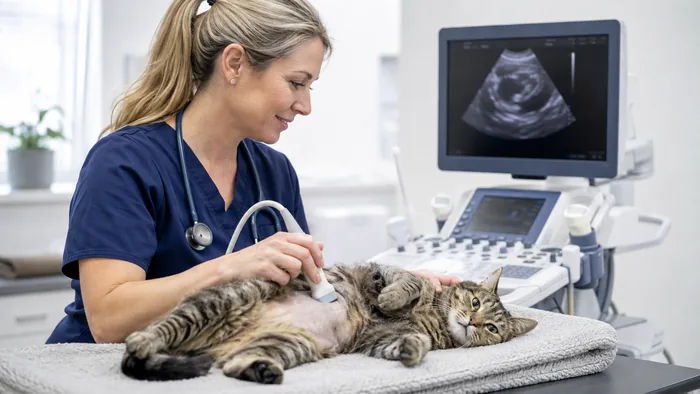
Ultrasound cost depends heavily on who performs the study and what question the veterinarian is trying to answer. A focused point-of-care scan used in an emergency is not the same service as a complete abdominal study interpreted by a radiologist. A cardiac ultrasound is different again and may involve a cardiology service.
Ask whether the quoted fee includes image acquisition and interpretation. In some settings a veterinarian performs the scan and a specialist reviews saved images; in others the specialist performs the entire study. That difference can change both scheduling and price.
For Nampa households, planned care may involve comparing providers in Nampa, Caldwell, Meridian or Boise. Emergency cases are different: the best choice may be the facility that can evaluate and stabilize the pet promptly rather than the facility with the lowest advertised exam fee.
Sedation is not always necessary, but pain, anxiety or sampling procedures can make it appropriate. If the veterinarian plans a needle aspirate or biopsy during the ultrasound, ask whether laboratory analysis and sedation are included. Those add-ons can make a seemingly inexpensive scan much more costly.
Ultrasound is often paired with bloodwork or X-rays rather than replacing them. Each test answers a different clinical question. Before declining one because another has already been done, ask what additional information the veterinarian expects to gain and how it could change treatment.
What makes a useful written estimate in Nampa?
A useful estimate should be detailed enough that you can see the clinical plan, not merely a total at the bottom. Ask the practice to separate the examination, diagnostics, anesthesia or sedation, procedure, medications and hospitalization. If the quote is a range, ask which findings move the case from the low end toward the high end. This is especially important when the full diagnosis will not be known until imaging, laboratory work or surgery is completed.
Ask whether diagnostics can be completed at the same location and whether overnight monitoring is available if needed. A lower initial quote can become more expensive when imaging, surgery or hospitalization requires transfer to another hospital.
How to compare two Nampa-area quotes fairly
First check whether both estimates are solving the same problem at the same level of care. A daytime procedure at a general practice cannot be compared line-for-line with emergency or specialty treatment that includes around-the-clock staffing and advanced monitoring. Second, compare what happens after the procedure. Rechecks, repeat imaging, take-home medications and rehabilitation can add meaningful cost even when the day-one price looks lower.
Third, ask about transfer. If one clinic performs the initial workup but sends the pet elsewhere for surgery or hospitalization, the receiving facility may charge another examination and may repeat tests when medically necessary. A slightly higher all-in quote at one facility can sometimes be more predictable than a fragmented quote spread across several locations.
Questions to ask before you approve treatment
- What is the working diagnosis and what uncertainty remains?
- What will each recommended test change about the treatment plan?
- Is the estimate a fixed amount or a low-to-high range?
- Which services are not included?
- Could the pet need a specialist, transfer or additional night of care?
- Are medications and follow-up visits included?
- Will I receive copies of imaging, laboratory results and discharge notes?
- If the condition worsens overnight, who should I contact?
Payment, insurance and timing
For planned treatment, request the estimate early enough to check insurance coverage and arrange payment without delaying care. Pet insurance policies vary widely and may exclude pre-existing conditions. Even when a claim is eligible, many hospitals require payment at the time of service and the insurer reimburses the owner later. Confirm the process with both the practice and insurer rather than assuming direct billing.
For emergencies, treatment timing can outweigh the benefit of shopping. If the pet is unstable, seek professional evaluation first. Once stabilization has begun, ask for the first-stage estimate and request an update before major additional procedures whenever the medical situation allows.
Aftercare can be part of the real cost
The financial episode does not always end at discharge. Depending on the problem, aftercare may include medications, restricted activity, special food, wound checks, repeat bloodwork, repeat X-rays or rehabilitation. Ask for a written discharge plan and a realistic follow-up schedule so predictable costs are not mistaken for surprise charges later.
How to prepare before calling a veterinary provider
Write down when the problem started, whether symptoms are getting worse, what the pet has eaten, current medications, known medical conditions and any recent test results. If an injury or ingestion is involved, record the approximate time and bring packaging or a photo when relevant. Clear information can make triage faster and helps the veterinary team decide which diagnostics are most useful.
Ask the practice what records it needs before arrival. For scheduled referrals, sending prior laboratory work and imaging in advance can save time. For emergencies, bring what you have without delaying departure. The receiving team may still repeat tests when the pet's condition has changed or when newer information is medically necessary.
How to read a veterinary estimate
Look for the difference between one-time charges and services that may repeat. An examination is usually one-time for that visit, while hospitalization, monitoring, medications and laboratory tests can recur by shift or day. Ask which items are estimates and which are fixed. Also ask whether taxes, medical-waste fees, pharmacy charges or outside laboratory fees are included when applicable.
If the total is beyond your budget, tell the veterinary team early. The veterinarian may be able to explain which parts of the plan are medically essential, which are contingent and whether there are legitimate alternative approaches. Do not simply remove tests from the plan based on price without understanding what information would be lost.
What happens after discharge
Before leaving, get written instructions covering medications, feeding, activity, wound care and warning signs that require a recheck. Confirm when the next appointment is due and whether it is included in the original estimate. If repeat imaging or bloodwork is expected, ask for a planning range so the follow-up cost is not a surprise.
Compare your next step
Use the Pet Care Cost Calculator to compare veterinary cost information before contacting a local provider.
Compare Vet Prices Now