Cats are masters of disguise. They are stoic, independent creatures who have evolved to hide their pain and weakness to avoid predators in the wild. By the time a cat shows obvious signs of illness—hiding in the closet, not eating, completely lethargic—the disease has often progressed to a critical, life-threatening stage.
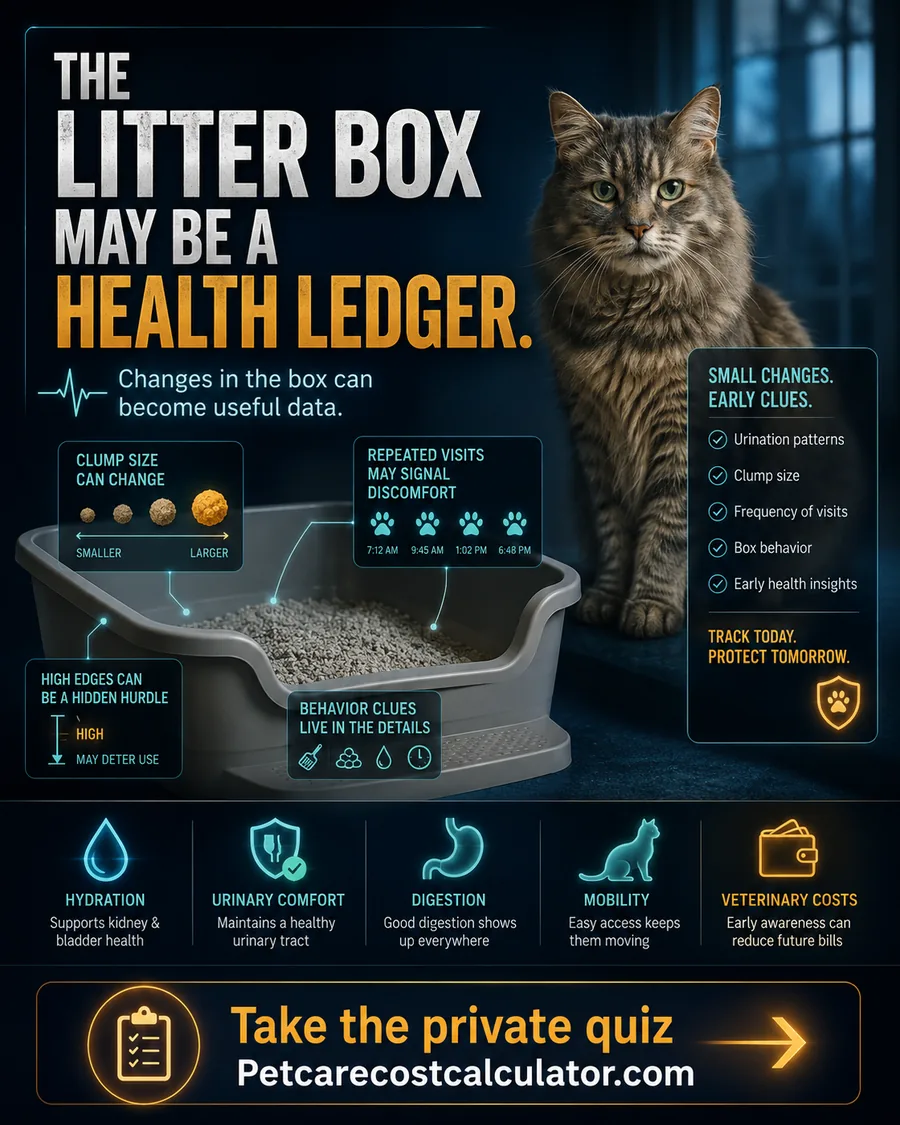
But cats have one major tell. They have a "Health Ledger." It is the litter box. The image before us brilliantly presents the litter box as a data-rich environment that we are currently ignoring.
When we scoop the box, we usually do it with our eyes closed, holding our breath, just trying to get the chore done. But we should be doing it like detectives. "Small changes. Early clues."
The image points out three vital data points: Clump Size, Repeated Visits, and Box Behavior.
1. Clump Size and Urination Patterns: The size of the clumps changes. If the clumps suddenly get smaller and there are many of them, it indicates that the cat is urinating very small amounts, very frequently. This is the hallmark of kidney disease, urinary tract infections, or bladder crystals. They are trying to pee, but their bladder hurts or can't hold the urine. Conversely, if the clumps get massive (a huge puddle of urine), it could be a sign of diabetes, hyperthyroidism, or kidney failure, where they are losing excessive amounts of water.
2. Repeated Visits: The image tracks a cat visiting the box at 7:12 AM, 9:45 AM, 1:02 PM, and 6:48 PM. This is not normal. A healthy cat uses the box 2-3 times a day. A cat that runs to the box every few hours is in distress. It is a desperate attempt to relieve pressure, often due to bladder stones or a painful urinary tract infection.
3. Box Behavior and High Edges: The image warns about "High Edges" being a "Hidden Hurdle." As cats age, they get arthritis, just like dogs. They lose the ability to jump. If you have a high-sided litter box, and your cat is struggling to climb in, they will avoid it. They will hold their urine, which leads to crystal formation, which leads to UTIs. Or, they will pee outside the box, which is their way of saying, "I physically cannot get in there anymore."
The Medical Nightmare: A blocked urethra in a male cat is a life-threatening, astronomically expensive emergency. If they cannot urinate, their bladder will burst, or their kidneys will fail, and they will die a horribly painful death within 24-48 hours. If you had only paid attention to the "Repeated Visits" in the litter box, you could have caught it early and treated it with a simple diet change and medication. Instead, you are sitting in an emergency room with a $3,000 - $5,000 bill and a cat fighting for their life.
The Root Cause: Why do cats get kidney disease and bladder stones? Because they are dehydrated. Cats are descended from desert animals, so they have a low thirst drive. By the time they feel thirsty, they are already dehydrated. The chronic dehydration leads to concentrated urine, which forms crystals. Furthermore, chronic low-grade inflammation and poor kidney function accelerate the aging process.
"Track today. Protect tomorrow." This is the mantra. Stop scooping the litter box blindly. Look at the size, look at the frequency, and look at their effort. If you see changes, address them immediately. And to protect them long-term, you must support their hydration, their renal function, and their mobility.
An accessible litter box, a hydration-rich diet, and advanced kidney and joint support can erase the red alerts from this ledger. Give your cat the gift of longevity by reading the data they are leaving for you every single day.
Not sure what pet care may cost?
Use the free private assessment to organize likely treatment and cost questions before you speak with a veterinary provider.
Take the Private QuizRelated Idaho pet-care cost guides
Cat Urinary Blockage Treatment Cost in Idaho · Emergency Vet Cost in Idaho