
It starts with an odor. A distinct, unpleasant smell coming from their head. Then, the scratching. The head shaking. The whining. You look inside their ear and see dark, waxy buildup. You take them to the vet, get a prescription for ear drops, clean it out, and a few days later, it looks better. But a month later, the smell is back. The scratching is back. They are shaking their heads violently, crying in pain.
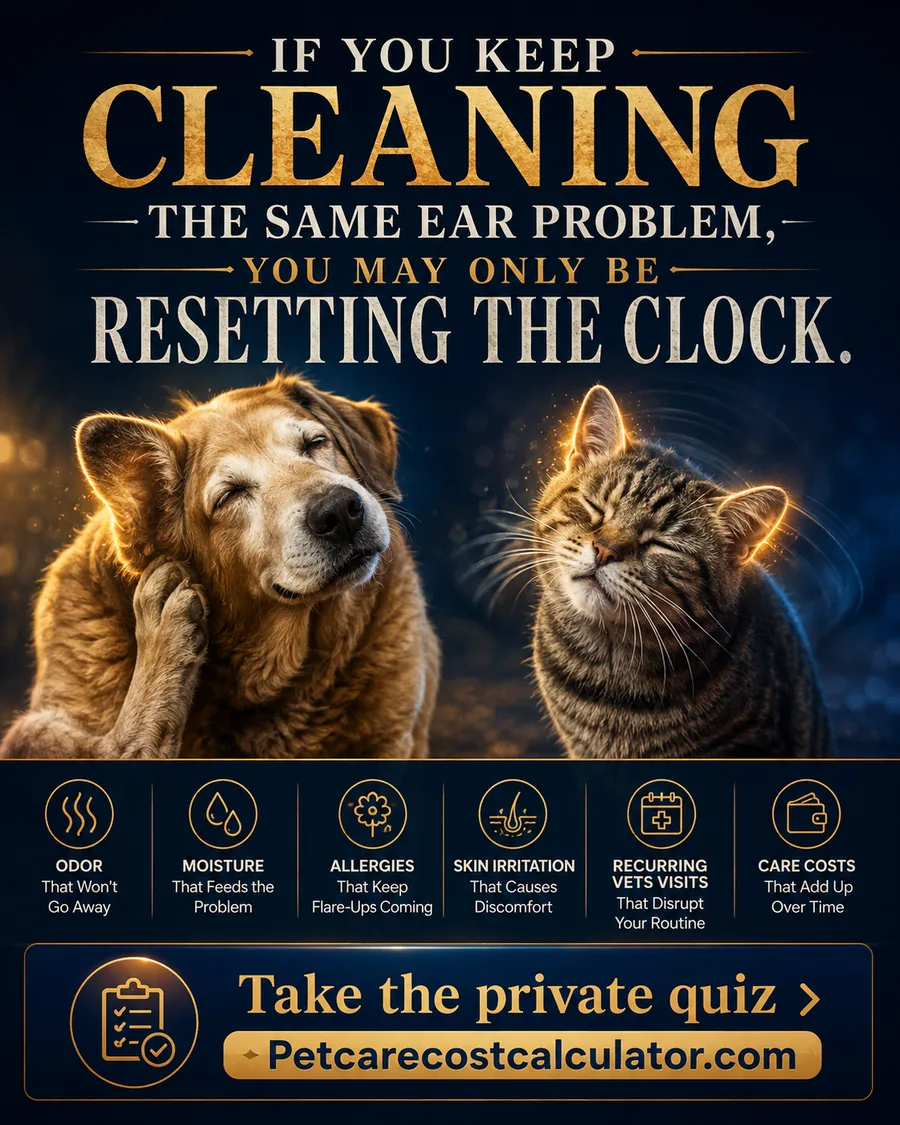
The image presents a brutal truth: "If you keep cleaning the same ear problem, you may only be resetting the clock."
We fall into a vicious cycle with ear infections. We treat the symptoms—the yeast, the bacteria, the odor—with chemical treatments and topical antibiotics. We clean the outer ear. But if we are constantly repeating this cycle, we are doing nothing more than hitting the "reset" button. We are not addressing the root cause.
The image breaks down the true drivers of the issue: "Odor that won't go away," "Moisture that feeds the problem," "Allergies that keep flare-ups coming," "Skin irritation causing discomfort," and most importantly, "Recurring Vet Visits that disrupt your routine," and "Care Costs that add up over time."
Why do pets get chronic ear infections? Because the ear canal is a direct reflection of the body's internal health.
1. Allergies: This is the number one culprit. When a pet has environmental or food allergies, their immune system overreacts. This leads to systemic inflammation. The skin is the largest organ of the body, and the sensitive tissue inside the ear canal is often the first place to show allergic reactions. If the allergies are not managed, the ear will always get infected.
2. Hormonal Imbalances: Hypothyroidism or Cushing's disease wreak havoc on the immune system and create the perfect breeding ground for yeast and bacteria in the ears.
3. Anatomy and Moisture: Hairy, floppy ears trap moisture. If the pet is a breed prone to wax buildup, that moisture creates a dark, warm environment for bacteria to thrive.
4. Gut Health: A vast majority of the immune system is in the gut. If the pet's microbiome is out of balance, leading to leaky gut, allergens flood the system, causing those allergic ear reactions.
When we just put drops in their ears, we are ignoring the massive dumpster fire happening inside their body. The drops might kill the bacteria today, but because the immune system is still overactive, the bacteria returns tomorrow.
This continuous cycle of "Resetting the clock" is not just exhausting for you, it is painful for your pet. They suffer from chronic itch, pain, and discomfort. And it is expensive. Every vet visit is a bill. Every bottle of expensive medicated drops is a cost. Eventually, if the ear canal thickens and calcifies from chronic infection, surgery to remove the ear canal (Total Ear Canal Ablation) might be the only option—a massive, invasive, and highly expensive surgery.
The only way to break the cycle is to look beyond the ear. You have to address the "systemic" issues. You have to combat the allergies by reducing systemic inflammation. You have to support a healthy microbiome to build a robust immune system. You have to improve the quality of their skin and coat from the inside out, making it harder for bacteria to take hold.
Stop treating the ear. Start treating the animal. If you stop the inflammation, the moisture, and the allergic reactions at the source, the ear canal will heal, and it will stay healthy. It’s time to address the root cause so they never have to scratch, shake, or suffer at the hands of an infection again.
Not sure what pet care may cost?
Use the free private assessment to organize likely treatment and cost questions before you speak with a veterinary provider.
Take the Private QuizRelated Idaho pet-care cost guides
Paying for Veterinary Care in Idaho · Emergency Vet Cost in Idaho